Pinterest

Follow Me on Pinterest

Thursday, June 21, 2012

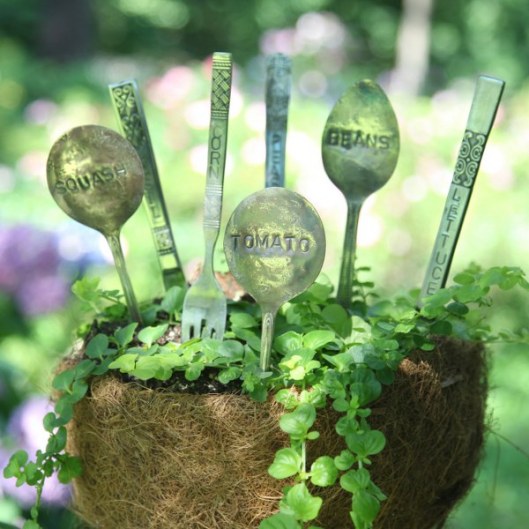
DIY STAMPED SILVERWARE GARDEN MARKERS


I am always intrigued in the different ways gardeners
come up in marking their vegetable gardens.
I found this link and really liked their idea.

Enjoy!


Monday, June 18, 2012

HOW TO GROW POUNDS OF FOOD IN A TINY GARDEN

 How to Grow Pounds of Food in a Tiny Garden

By s.e. smith, Networx
Gardening in small spaces—like apartment balconies, concrete driveways and postage-stamp sized yards—can feel like an exercise in futility if you’re trying to get enough of a crop to make it worth it. Fortunately, small spaces can actually yield a lot of produce, if you plant the right things, handle them well, and manage your space with care. I spoke with Gowan Batist, an organic farmer who specializes in biointensive methods, about how to get the most out of a very small garden.

She says to start with selecting the right containers. The best bang for your buck in an urban area can be five gallon buckets, which she admits don’t look that awesome, but are great for intensive gardening. Many restaurants have extras of food-grade quality that they will happily give away—and she does advise food-grade buckets because others may have leftover toxins from their contents, or can produce dangerous chemicals as a result of offgassing. (For instructions on how to make self-watering containers in five gallon buckets that are free of plumbing, Los Angeles gardener Mike Lieberman offers a tutorial.)

Drill holes about one to two inches up the side for drainage. This ensures that your soil doesn’t get waterlogged, while creating a small reservoir to keep it moist and prevent waste. For urban areas, the best place to get soil is probably an outside source, whether recycled potting soil from a nursery or new soil purchased from a supplier. If you do use soil from your yard, Batist strongly advises getting a soil test, particularly for lead, a common contaminant. Your health department or an organization like the Safe Urban Gardening Initiative may offer this for free or a small fee, especially if you are low-income.

Building up the soil helps produce a larger yield, and one of the best ways to do that while also taking care of kitchen waste is to use worm bins. Vermicomposting, as it is known, can be done in stacking bins under the counter, and it doesn’t produce strong odors. Commercial kits are available for people who don’t want to build their own, and the worm casings can be mixed directly with the soil to add nutrients. Watch out for compostable items with seeds that might germinate, like tomatoes and melons!

For starter plants that offer high yields, one of Gowan’s personal favorites is the potato. Using a potting soil and straw mix, gardeners can grow a large number of potatoes in a single five gallon bucket, and they actually provide the most calories per square foot. Radishes offer what she calls “instant gratification gardening” because they germinate in less than a month and you can constantly reseed to keep them coming.
Bush beans, tomatoes, and snap peas are other options; bush beans in particular have a high yield and are easy to grow. Another option is a cutting mix like a mesclun blend or lettuce mix, which you can harvest as you go. Continual harvest and resowing is a key component of grow biointensive agriculture, and there’s no reason you can’t replicate it on a small scale at home.

She has a few warnings for urban gardeners; one of the most critical is herbicide drift, which can occur if people in your neighborhood are using herbicides to manage weeds, a particular problem with large lawns. If your plants develop twisted, bubbly leaves, it’s an indicator that someone in the area is using herbicides. One option for dealing with the problem is growing on a shielded sun porch, but you can also see if you can track down the perpetrator and discuss gentler options for weed management.

Urban areas also tend to have a lack of beneficial organisms, including ladybugs, which eat aphids, and pollinators like bees. You can buy ladybugs for aphid control; and there’s something rather delightful about releasing a large clutch of them into the neighborhood. To replace pollinators, you can be your own bee with a paintbrush, or consider establishing a mason bee block near your garden. These friendly pollinators don’t produce honey and don’t require much shelter, and, critically, they don’t sting.
Friday, June 15, 2012

USING ASHES IN THE GARDEN

Ashes In the Garden: Using Ashes In The Garden
Posted By Heather Rhoades In Composting Basics |
By Heather Rhoades
[1]
Image by Alternative Heat

A common question about composting is “Should I put ashes in my garden?” You may wonder if ashes in the garden will help or hurt and if you use wood or charcoal ashes in the garden, how it will affect your garden. Keep reading to understand more about wood ash uses in the garden and in compost.

Should I Put Ashes In My Garden Or Compost?

The short answer to if you should use wood ash as a fertilizer is “yes”. That being said, you need to be careful about how and where you use wood ash in the garden.

Using Wood Ash As A Fertilizer

Wood ash is an excellent source of lime and potassium [2] for your garden. Not only that, using ashes in the garden also provides many of the trace elements that plants need to thrive.
But, wood ash fertilizer is best used either lightly scattered or by first being composted along with the rest of your compost. This is because wood ash will produce lye and salts if it gets wet. In small quantities, the lye and salt will not cause problems, but in larger amounts, the lye and salt may burn your plants. Composting fireplace ashes allows the lye and salt to be leached away.
Not all wood ash fertilizers are the same. If the fireplace ashes in your compost are made primarily from hardwoods, like oak and maple, the nutrients and minerals that will be in your wood ash will be much higher. If the fireplace ashes in your compost are made mostly by burning softwoods like pine or firs, there will be less nutrients and minerals in the ash.

Other Wood Ash Uses In The Garden

Wood ash is also useful for pest control. The salt in the wood ash will kill bothersome pests like snails [3], slugs [4] and some kinds of soft bodied invertebrates. To use wood ash for pest control, simply sprinkle the wood ash around the base of plants that are being attacked by soft bodied pests. If the ash gets wet, you will need to refresh the wood ashes as the water will leach away the salt that makes wood ashes an effective pest control.
Another use for ashes in the garden is to change the pH of the soil. Wood ashes will raise the pH and lower the acid [5] in soil. Because of this, you should also be careful not to use wood ashes as fertilizer on acid loving plants like azaleas [6], gardenias [7] and blueberries [8].

Article printed from Gardening Know How: http://www.gardeningknowhow.com
URL to article: http://www.gardeningknowhow.com/composting-basics/wood-ashes-compost.htm
URLs in this post:

JUNE BLOOMS, BUGS AND BUTTERFLIES

My vegetable garden is not in bloom yet but I took several pictures of what is in bloom
and of some visitors.

 Hibiscus
 Hosta
 Blackeyed Susan with a visitor
 Toad seeking to stay cool
 My rosebush filled with many blooms.
 Bell flower
Phlox
 Obedient plant.  I'm surprised there are no bees.

 Petunias
 Bush Green Beans
 Roma tomato plants
 My first strawberry.  It was really good.


Foxglove

 This is one of my bushes in the front of the house at BEFORE.
This is what it looks like AFTER.  I got rid of the bush.  
Four more to go in the front yard.
Don't know what kind of butterfly this is.
But it is on the Boneset flowers in the front of my house.

HOW YOU ENRICH YOUR GARDEN WITH HUMMINGBIRDS?


I love hummingbirds.  I love how they fly.  One of my goals for my gardens is to attract more of them.  I found a wonderful article online about it so I will share it with you.  May this inspire you to attract them too.

By Jackie Carroll

Image by Kelly Colgan Azar
Hummingbirds are a delight to watch as they dart and dash around the garden. To attract hummingbirds to the garden, consider planting a perennial garden for hummingbirds. If you’re asking yourself “How can I attract a hummingbird to my garden” or wonder about gathering hummingbird garden ideas for creating your own perennial garden for hummingbirds, simply continue reading to learn more.

How Can I Attract a Hummingbird to my Garden?

When attracting hummers to your garden, you should keep in mind that hummingbirds prefer to feed in shady areas, and they need plenty of open space for flying. Adding appropriate feeders and flowers will also help to welcome these creatures to the area.

Feeders

An easy method of attracting hummingbirds to the garden is to hang hummingbird feeders. Hummingbird feeders can provide the amount of nectar found in 2,000 to 5,000 flowers. Hang the feeders at varying heights between 3 and 5 feet off the ground, and fill them with a mixture of 4 cups of water and 1 cup of sugar. Bring the mixture to a boil, stirring occasionally. Change the mixture in the feeders every three days and scrub the feeders every week with hot, soapy water.

Flowers

Some of the best flowers for attracting hummingbirds to the garden include those that are orange or red in color and tube shaped. Some native American wildflowers that naturally attract hummingbirds include:
Hummingbirds also visit many other flowers in the garden, such as various types of lilies. Many perennial plants and trees make the best flowers for attracting hummingbirds and include:

Hummingbird Garden Ideas

Here are some additional ideas to entice hummingbirds into your garden:
  • Provide trees and shrubs near the feeding area to give the hummingbirds a place to rest and shelter from predators and weather.
  • Ripe fruit left near the feeding area makes the site more attractive to hummingbirds and it attracts gnats—an important source of protein for hummingbirds.
  • Hummingbirds also need water. A bird bath no more than 1 1/2 inches deep provides plenty of water for hummingbirds. If the bath is too deep, fill the bottom with coarse gravel.
  • Nectar provides only a part of a hummingbird’s nutritional needs. Many species eat large quantities of small bugs for the protein they provide. You can attract bugs to your garden with a small weedy patch or wildflower area. Never use insecticides in gardens where hummingbirds feed.
  • The best flowers for attracting hummingbirds are those with long throats that hang in clusters beyond the foliage. Flowers that are too close to the foliage force a hummingbird to beat his wings against the leaves as they feed. The plants should have several open blossoms at a time.

Article printed from Gardening Know How: http://www.gardeningknowhow.com
URL to article: http://www.gardeningknowhow.com/gardening-how-to/attracting-hummingbirds.htm
URLs in this post:


Thursday, June 14, 2012

CONSERVING WATER IN THE GARDEN


 Where I live, we've not had much rain.  Some of my friends have not watered their flower beds and
vegetable gardens because they live inside city limits where they pay for their water use.
Fortunately, I have well water but I still need to be careful with my water use.  I don't
want to run the risk of drying out my well. 

So what can be done to conserve water?  
Follow the link below for wonderful ideas for water conservation.

Sunday, June 10, 2012

DELAWARE COUNTY MASTER GARDENERS GARDEN WALK

Today my husband and I went and toured four of the six homes.  We both 
enjoyed talking with the owners and learning so much more.
I've come home more inspired to work on my own garden.
Here are some of the pictures that I took during our tours.


Bamboo